

The Taylor effect
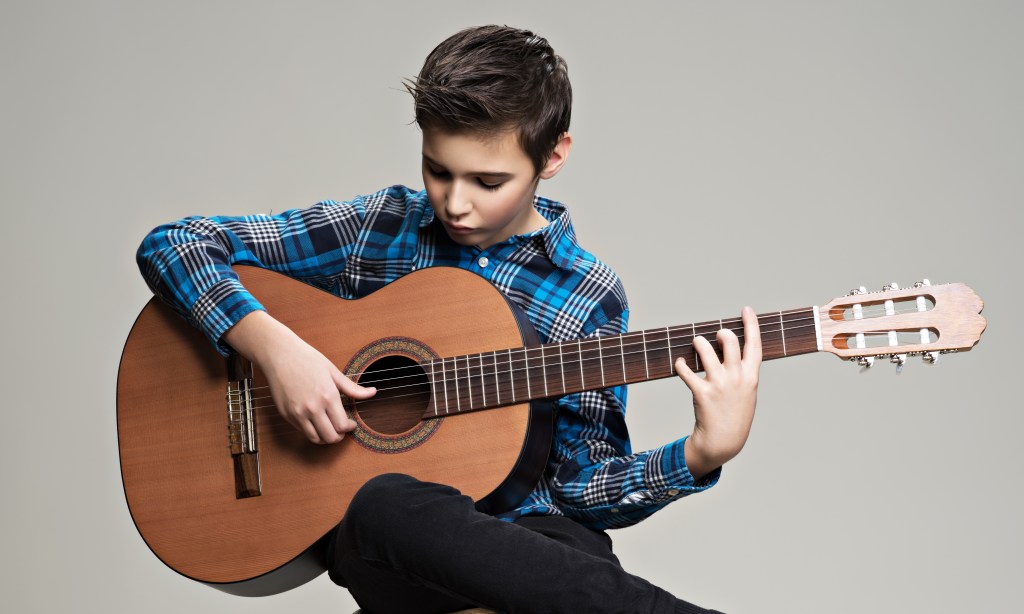
Possibly the world’s greatest celebrity, Taylor Swift is a cultural icon of our times. A formidable singer-songwriter, she’s written the soundtrack to the lives of a generation of young people for the better part of the 21st century. She’s also a talented guitarist.
She’s smashed music industry records, boosted the economy and is currently on tour across five continents. And she has a big impact on young musicians everywhere she goes: according to music schools across the globe, more and more youngsters, and especially girls, have started asking their parents for guitar lessons.
Time will tell
But many of us with kids know the drill. Our child (Swifty or not), becomes obsessed with the guitar, or something else. They beg us to buy them one, and after a lot of promises, we finally give in. But then, two months later, they want to throw in the towel. And that’s a real shame – not least because by then we’ve wasted some of our hard-earned cash. But it’s especially disappointing because they will miss out on the incredible pleasure (and benefits) of playing a musical instrument.
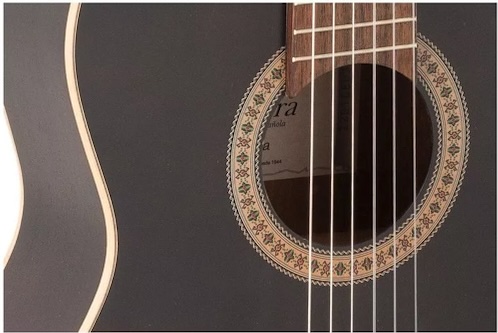
The best way to avoid this happening is by choosing a child’s first instrument with great care. We should spend as long as we need exploring all the possible options before selecting an instrument. As well as verifying that it is the correct size, it’s vital to steer clear of poorly constructed imitation models, of which there are many.

One size doesn’t fit all
You see, although it’s worthwhile investing in a scaled-down guitar if we’re shopping around for a travel guitar for ourselves that’s more comfortable to carry around, it’s paramount if we’re looking for an instrument for our child. This is because the first few weeks of playing are sink or swim: if a child’s hands are too small to fret the notes, it quickly becomes frustrating. And on top of the child’s physical capacity to reach every string (or not), scale length determines string tension. The longer the guitar scale, the greater the tension, which means it’s more difficult to push the strings against the fretboard. Therefore, a scaled-down guitar (with nylon strings, naturally) is easier for the novice guitarist to play.

The long and the short of it
Your average full-sized (4/4) classical guitar has a scale length of 650 mm. This figure refers to the distance between the nut and the bridge and it’s a much more useful way of measuring a guitar than the total length of the instrument, because different models can have longer or shorter headstocks. Scale length has a huge impact on how a guitar feels to play, so ideally, the size of the player and the guitar should match as closely as possible.
Try it for size
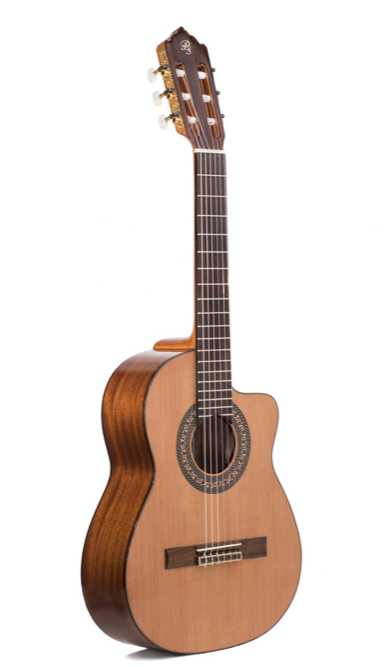
When it comes to picking the correct size of guitar for a child, age and height are generally used as a guide. Children who start to play the instrument between the ages of 5 and 8 (height 100 – 125 cm) should start with a 1/2 size guitar and then progress to a 3/4 size guitar between the ages of 8 and 12 (height 125 – 165 cm). After that, they can safely jump to a 4/4 size guitar. But if the child is only just starting to learn at the age of 12 or thereabouts, a 7/8 beginner instrument is highly recommended. This size is also a good choice for petite adults with a height from 150 cm – 160 cm, or those with with smaller hands.

Hands on
Handspan is also a useful benchmark. To measure it, ask your child to spread their fingers out, then measure the distance between the tip of the thumb and the little finger. This is an accurate way of assessing whether your child will be able to reach all the strings and play open chords. A 1/2 size guitar would correspond to a handspan of between 14 cm and 16.50 cm and a 3/4 size guitar would correspond to a handspan of between 16.50 cm and 18.50 cm. For a child with a handspan greater than 18.50 cm, follow the advice above about whether to buy a 7/8 size guitar or a full-sized instrument.
The good, the bad (and everything in-between)
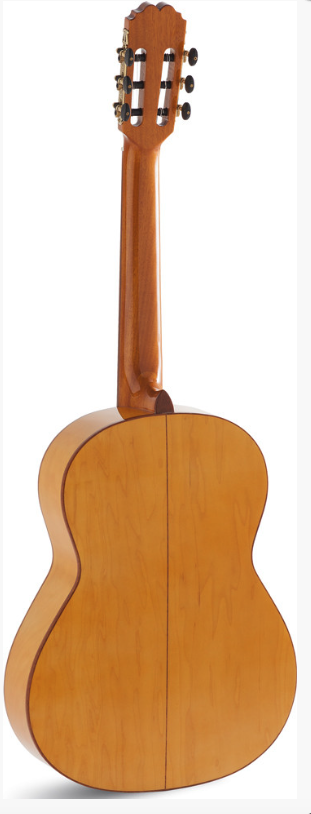
A legitimate concern of any adult buying a new instrument for their child is the price, naturally, but bear in mind that a guitar is one of those products that you get what you pay for. If you can, it’s is worth investing in an authentic Spanish model rather than spending your money on a mass-produced instrument made with low quality materials. It is easier to learn to play well on the genuine thing and students advance more quickly when they are able to quickly produce a good sound. A genuine Spanish guitar also has a good resale value, if you care for the instrument well.
And the good news is, it shouldn’t break the bank. You can buy a special-sized studio model made with excellent quality woods and meticulous craftsmanship for less than 200€. And at GFS, we can confirm that all of our special sized guitars are made in Spain to the same exacting standards as their full sized counterparts. Just scaled to size.

 Guitar From Spain