
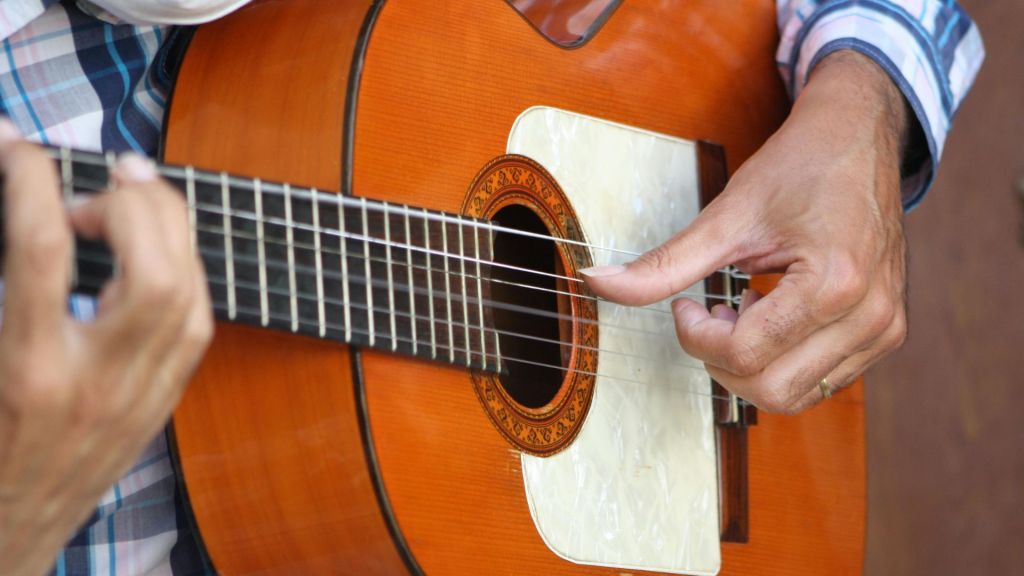
Spanish guitar is defined by its precision, rhythm, and expressiveness. These core techniques — many from the flamenco tradition — are essential tools for any guitarist looking to expand their sound and control.
These are techniques that everyone wanting to play in a flamenco style needs to learn. But also could add a unique flourish even for guitarists who play in a pop or rock style and who are learning easy guitar songs but want to play them in an original way.
So here we have five must-know Spanish techniques, along with tips to help you practice them effectively.
1. Rasgueado (Rolling Strum)
What it is:
A flamenco strumming technique where each finger “flicks” out in sequence to create a fast, percussive strum.
Why it matters:
It adds dynamic energy and rhythm, especially in fast-paced sections.
How to play it:
- Curl your fingers in toward your palm.
- One by one (starting from the pinky), flick each finger outward to strum the strings.
- The wrist stays mostly stable — let the fingers handle the movement.
Pro Tip: Practice slowly with a metronome. Focus on spacing the flicks evenly to keep the rhythm tight.
Video lesson:https://www.youtube.com/watch?v=YklzR5Rutp4&t=67s
2. Golpe (Percussive Tap)
What it is:
A tap on the guitar’s soundboard, typically played alongside or between rasgueado strums.
Why it matters:
It adds a strong rhythmic accent and turns your guitar into a hybrid percussion instrument.
How to play it:
- Use your ring or middle finger to tap just above or below the high E string.
- Time it with your strumming hand — it’s all about coordination.
Pro Tip: If you’re not using a tap plate (golpeador), go easy. A light but sharp touch works best.
Video lesson:
https://www.youtube.com/watch?v=enfHpKtJolI
3. Picado (Single-Line Runs)
What it is:
Fast, precise single-note picking using alternating fingers — most commonly index and middle.
Why it matters:
Picado is the go-to for clean, rapid scale runs in Spanish music.
How to play it:
- Alternate between index and middle fingers on single strings.
- Use small, efficient movements.
- Anchor your thumb lightly on the 6th string for control.
Pro Tip: Focus on clarity before speed. A clean, slow picado is more impressive than a messy fast one.
Video lesson:
4. Tremolo (Rapid Note Repetition)
What it is:
A technique for sustaining a single note through rapid repetition using three fingers — usually a-m-i — following a bass note played by the thumb.
Why it matters:
Tremolo creates the illusion of a sustained note, like a violin or voice.
How to play it:
- Start with a bass note using your thumb (p).
- Then repeat the same treble note quickly with a-m-i.
- Keep the motion consistent and even.
Pro Tip: Start at half speed with a metronome. Focus on tone and timing — this is more about control than speed.
Video lesson:
5. Alzapúa (Thumb Technique)
What it is:
A flamenco thumb technique that combines rhythmic strumming with fast bass note picking.
Why it matters:
It adds a punchy, rhythmic drive to your playing — especially in dance-style flamenco.
How to play it:
- Downstroke across multiple strings with your thumb.
- Follow with an upstroke using the side of your thumb.
- End with a plucked bass note using the tip of your thumb.
Pro Tip: Break it into three parts and practice each motion individually. Once it’s smooth, combine them into a loop.
Video lesson:
Final Thoughts
These five Spanish guitar techniques are more than stylistic flourishes — they’re essential skills that open up a new range of expression. Add them to your practice routine slowly, one at a time, and you’ll start hearing a dramatic change in your playing.
Pro Tip for all of them: Focus on rhythm, tone, and control. Speed comes naturally with time.
Author: Drew Haselhurst
Drew Haselhurst is a guitarist of over 25 years and the founder of online guitar magazine Guitar Mammoth. He’s played in lots of (failed) bands, is obsessive about guitar gear, and is a superfan of the band Elder. When he’s not playing guitar, or writing about it, he’s a dad and a creative director in advertising.
 Guitar From Spain