

A closer look at the Amalio Burguet Vanessa classical guitar: spruce top
The family jewels
Luthier and musician Amalio Burguet has been in the guitar business for almost fifty years now. His highest calling (and possibly greatest achievement)? To transform ‘wood into pure art’. This noble maxim has evidently been inherited by his two children Vanessa and Damian, and the fruits of their endeavours include cutaway guitars, 10-string guitars, electrified guitars, flamenco guitars and classical guitars. One of those classical models is the eponymous Amalio Burguet Vanessa, a ‘studio’ model with a sound and projection well above its pay grade.

Living soul
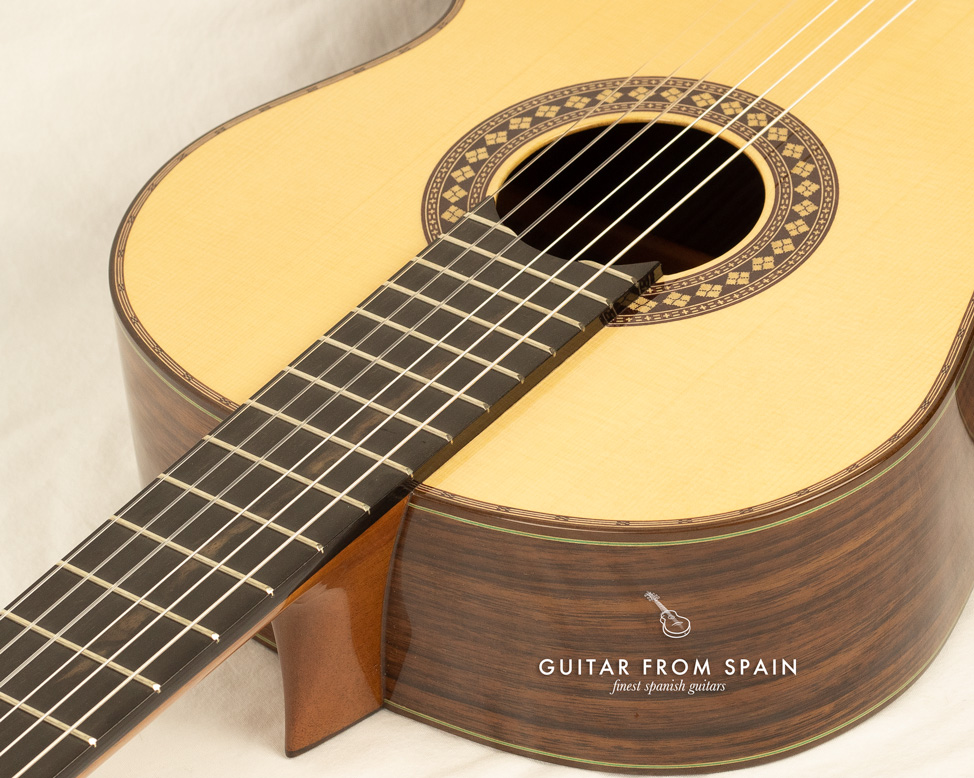
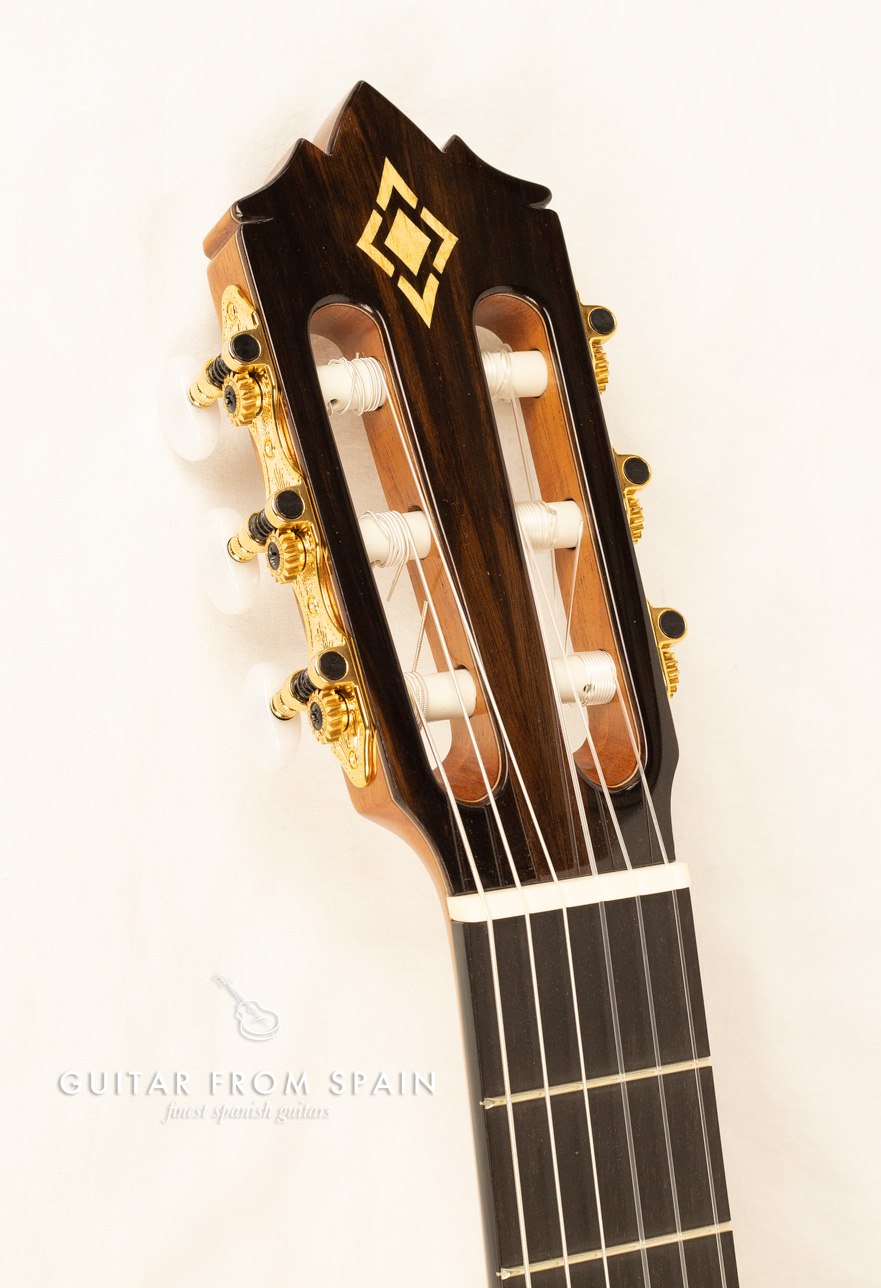
Along with every other model in the Burguet catalogue, the Amalio Burguet Vanessa with spruce top is made of the finest all solid woods, and entirely by hand: an Indian rosewood back and sides, African ebony fretboard and cedar neck with ebony strip reinforcement. These are first meticulously selected, then subjected to a painstaking drying process under carefully controlled humidity and temperature conditions. After some twenty years, they acquire the ideal humidity levels associated with optimal tonal quality and stability. Only then are they cut and shaped, assembled and then varnished, to become, as Amalio Burguet poetically puts it, the very ‘soul’ of the guitar.
Over the Moon
The Amalio Amalio Burguet Vanessa comes with either a spruce or cedar top, and the choice of soundboard is obviously personal, depending on the particular tonal qualities you are looking for. But today our focus is on the specific attributes of the spruce top, of which there are many.
Historically, of course, spruce has been the material of choice for the soundboard of the classical guitar: GOAT of the guitar making world, luthier Antonio de Torres Jurado, built all of his soundboards out of Moon spruce, which is harvested in the autumn and winter when the sap is at it’s lowest. This produces a stiffer and drier tonewood and a more responsive top.
The use of cedar for the soundboard has been a more recent phenomenon, which began in the mid-1960s.

Why spruce up?
First and foremost, a spruce top will ‘evolve and mature’ with age, alongside the guitarist. As the wood slowly dries and stiffens, in a process known as ‘opening up’, it becomes lighter and more stable, contributing to an improved sound quality. This evolution becomes especially notable the more you play it, translating into more resonance and a better sound projection (spruce tends to project sound in a more linear way, whereas cedar has a ‘radiating’ effect), as well as a clearer, brighter tone. The Amalio Burguet Vanessa has that signature punchy and bell-like timbre, coupled with sweet overtones, whilst the trebles and basses offer a deep, rich and velvety sound.
As the sound matures, the buttery yellow spruce top will also darken to a lovely ‘vintage’ amber hue, at the same time.
Vanessa Paradise
Spruce is also considered the more versatile of the two tonewoods, allowing you to play
a wider range of colours, which makes it the ideal choice for a lot of different musical
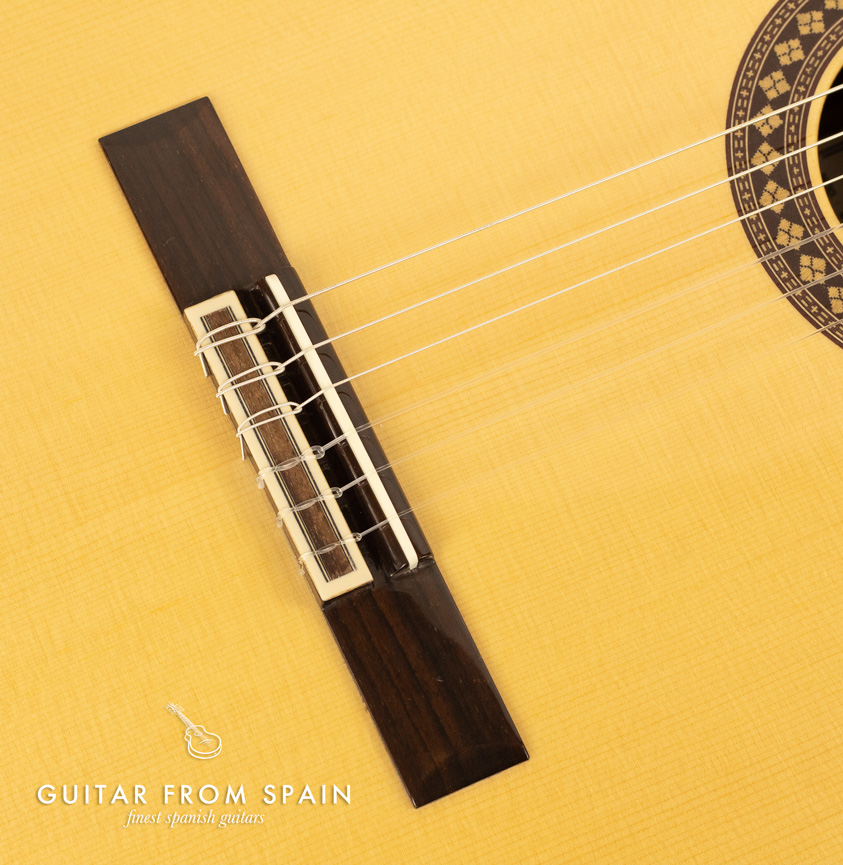
genres. The Amalio Burguet Vanessa features a European spruce top which is particularly responsive and highly nuanced: a guitarist with a sensitive touch will get an incredible variety of timbres from this sublime model.
Today’s skilled luthiers are actually choosing European spruce or picea abies more frequently than other varieties of spruce, of late: the quick response, strong attack, warm and thick tone, volume and clean separation of notes are very much appreciated by the modern guitarist of many genres.
 Guitar From Spain