
The classical you give her — whenever her day falls — might be the one she finally keeps playing
The mother who almost played
Most houses had one. Propped against a corner, half-in the living room and half-out, with two strings dead and a pick wedged in the rosette. Mum’s guitar. The one she’d play a few chords on at Christmas, or when a cousin from Cádiz visited, and then quietly retire for another year. She could’ve been good, everybody said so. Life had other plans.
Mother’s Day is one of those holidays that doesn’t quite agree on a date. Britain marks it in March, Spain on the first Sunday of May, the United States and most of Europe on the second, France at the end of the month, and the list goes on. The feeling, though, doesn’t need a calendar. If somewhere on that list there’s a mother who once played a little, or meant to play more, there is a strong case to be made for giving her the one thing she never quite got: a guitar that actually suits her.
The classical trap
A traditional Spanish classical is a thing of beauty. It is also, for anyone arriving from the steel-string world — as many self-taught mothers did, with a folk guitar in the ’70s or an acoustic passed down from a brother — an unforgiving reach. The neck is wider by close to a full centimetre at the nut. The strings space further apart. The fingertips of a returning player meet nylon that feels, at first, softer than expected but somehow further away. Many mothers try once, decide their hand is too small, and put the guitar back in the corner.
This is why, in recent years, a quietly brilliant category has grown in Spanish lutherie: the crossover. Same spirit, gentler entry.
A softer landing
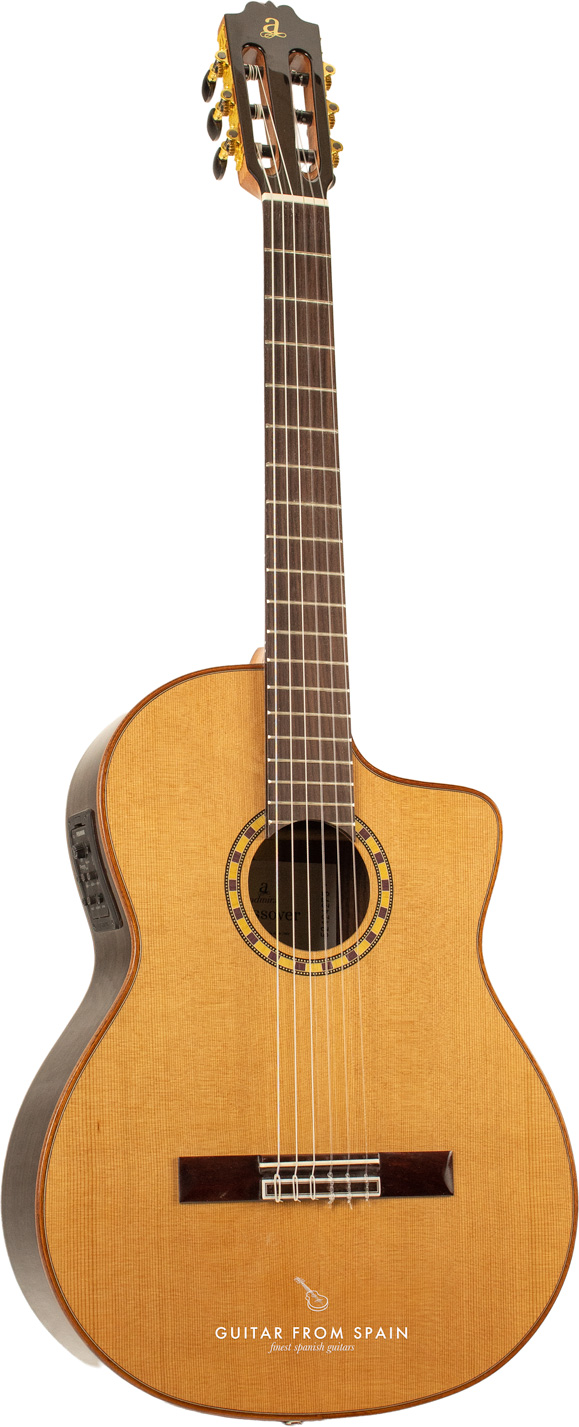
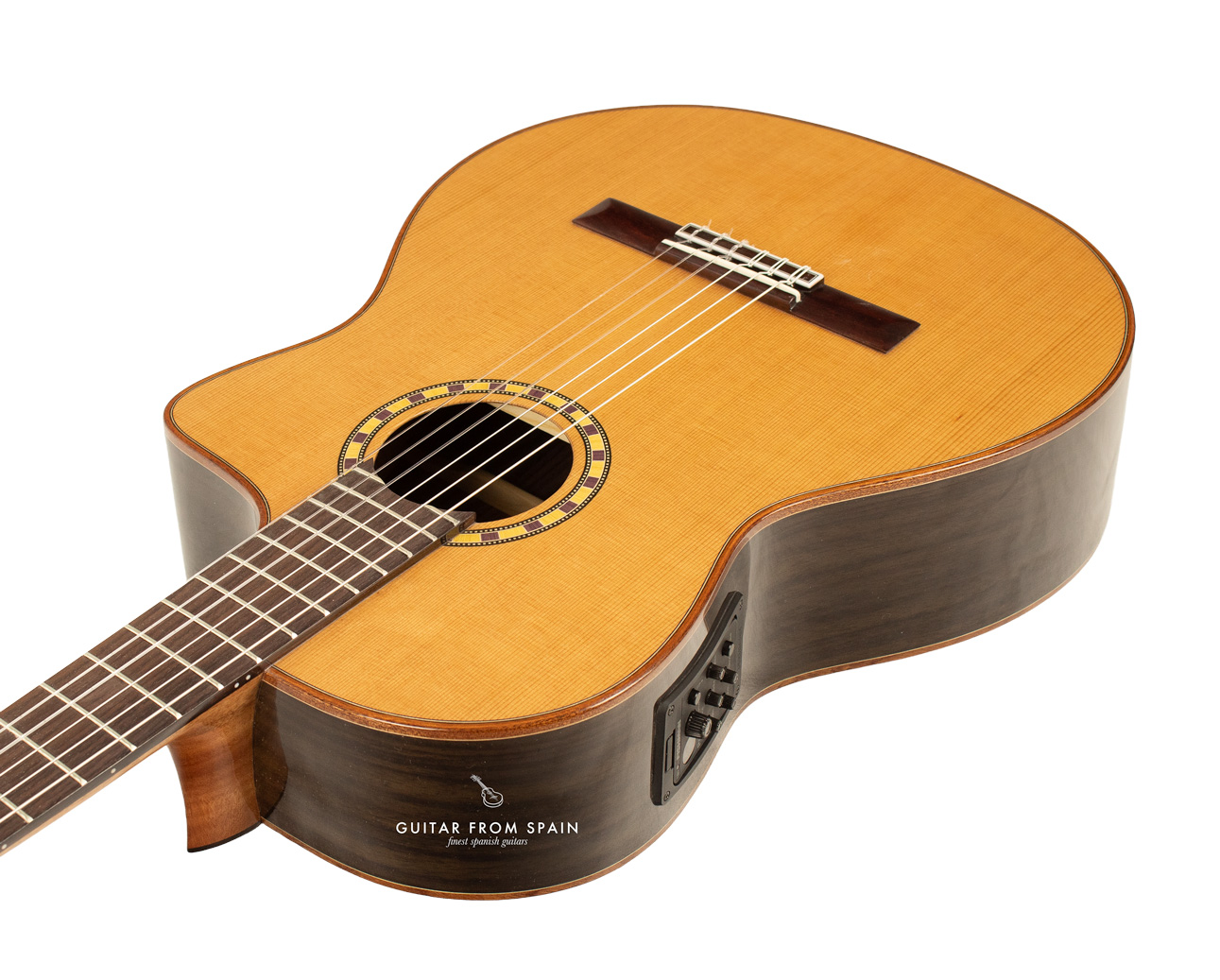
The Admira Crossover is, to our mind, the friendliest invitation back into a nylon-string guitar for a musician returning after years away. Built in the Admira workshop with a solid cedar top and rosewood back and sides, it carries the warm voice of a classical — that soft attack, the woody bloom in the mid-range — but its neck is 48 millimetres wide at the nut rather than the conventional 52. That four-millimetre difference sounds academic on paper; in the hand, it is the difference between “this feels wrong” and “oh — I can do this again.”
Two touches make it particularly suited to a lapsed guitarist. It has a subtle cutaway, so the higher frets — where solos live, and where returning players often want to chase a favourite melody from memory — are there for the taking. And it comes with a Fishman Classica Blend preamp, so when she decides, months from now, to play a quiet piece in the garden or record something on her phone for her children, the guitar has already said yes.
Short and sweet
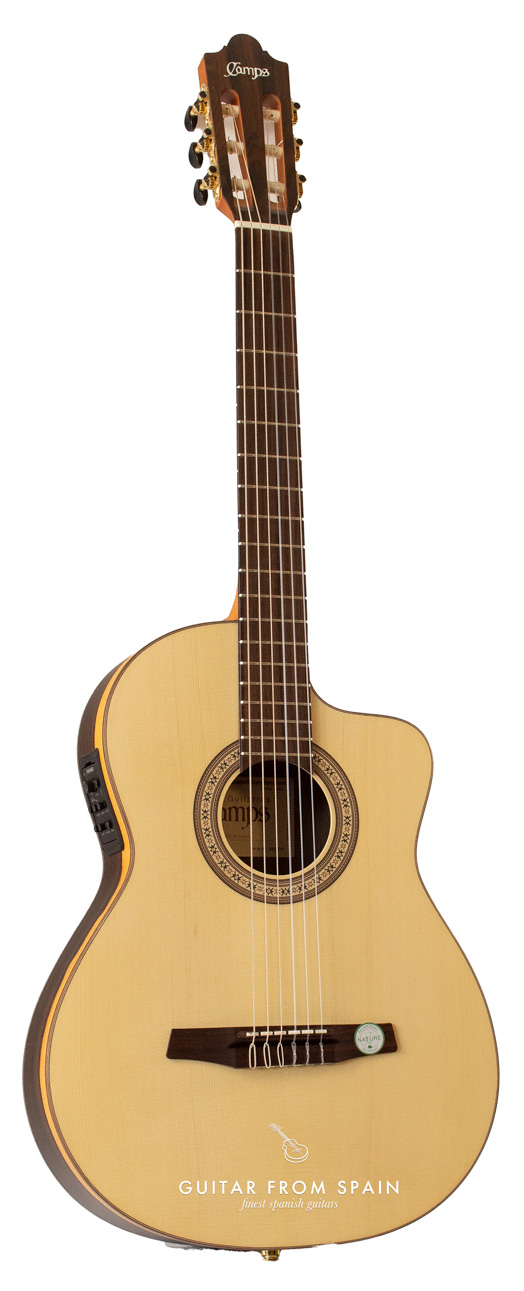
Some mothers didn’t stop playing because the neck felt unreachable. They stopped because the guitar was simply too big — too wide on the lap, too heavy on the shoulder, too much body to wrap an arm around when you’re not particularly tall. For them, the Camps CW1 is the answer.
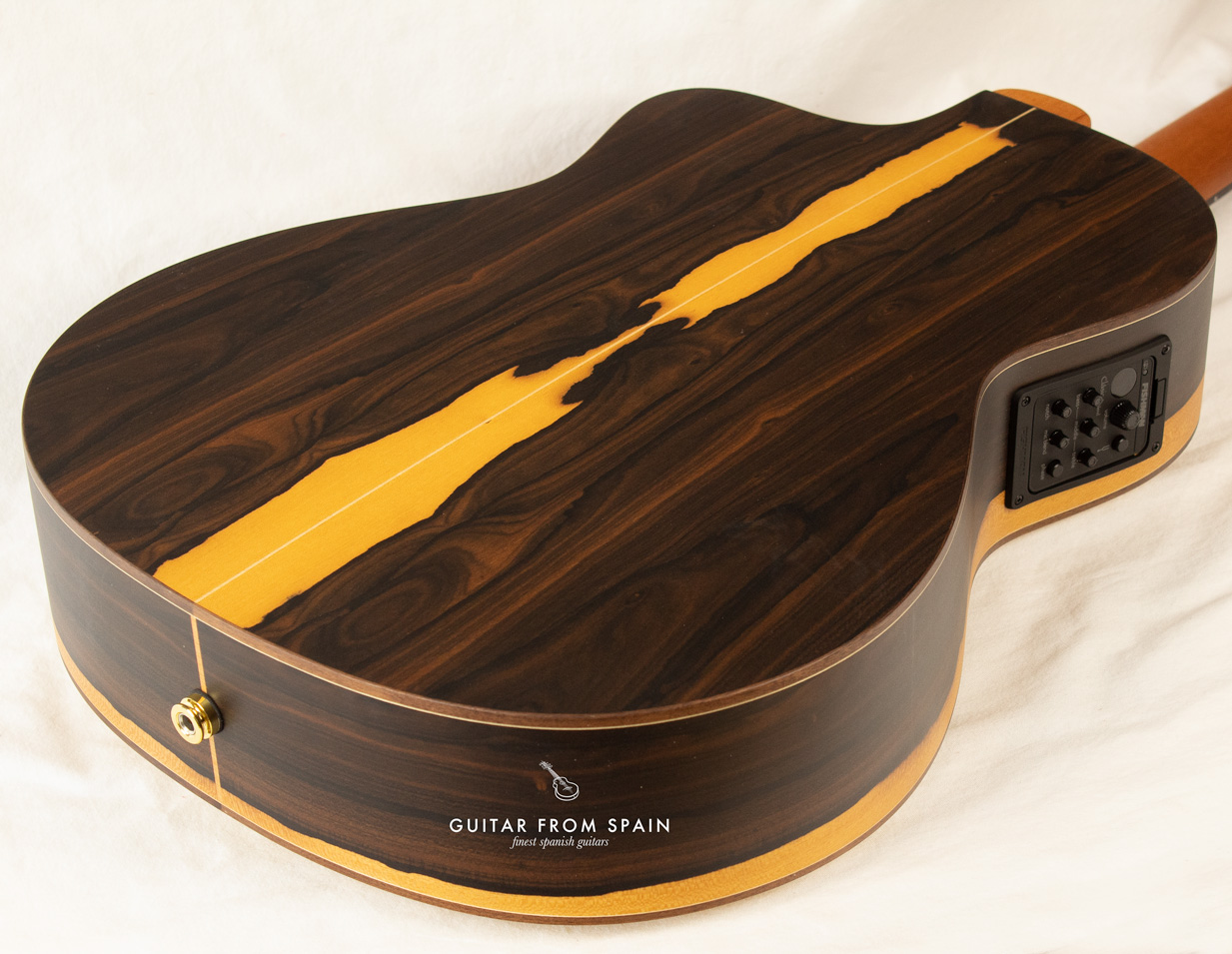
Like the Admira, it has a narrow crossover neck. But the CW1 goes further: a slightly smaller body, a shorter scale length, and a solid spruce top in place of cedar, which gives it a brighter, more responsive voice that rewards a lighter touch. If the Admira is the gentler handshake, the CW1 is the guitar built smaller all round — closer, lighter, more sit-on-the-sofa than stand-at-the-conservatory. Electronics come fitted, too, so a quiet kitchen recital can one day become a video sent to the grandchildren.
The family likeness
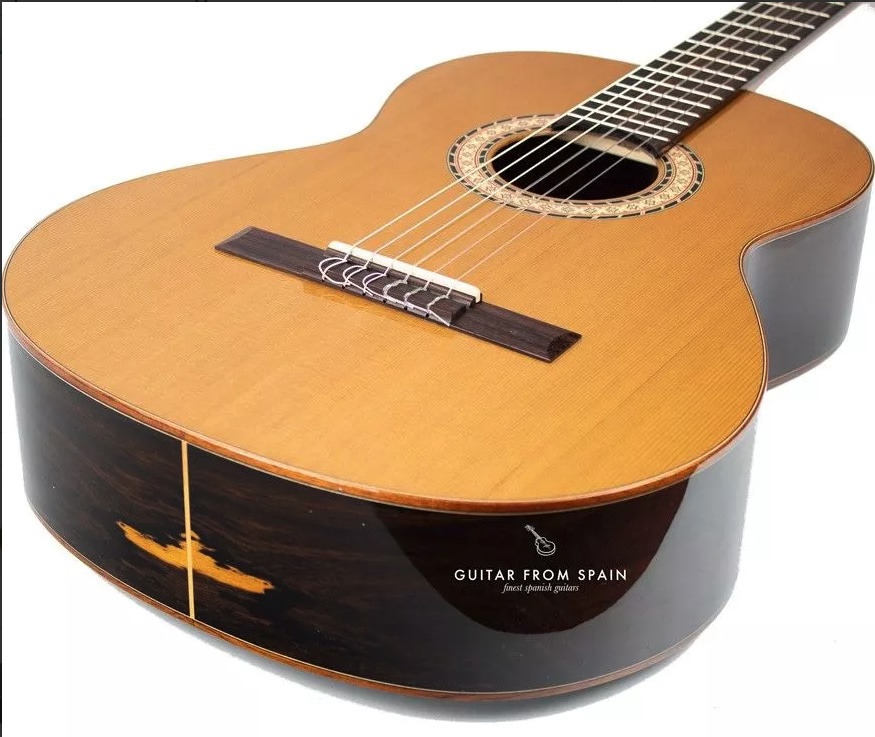
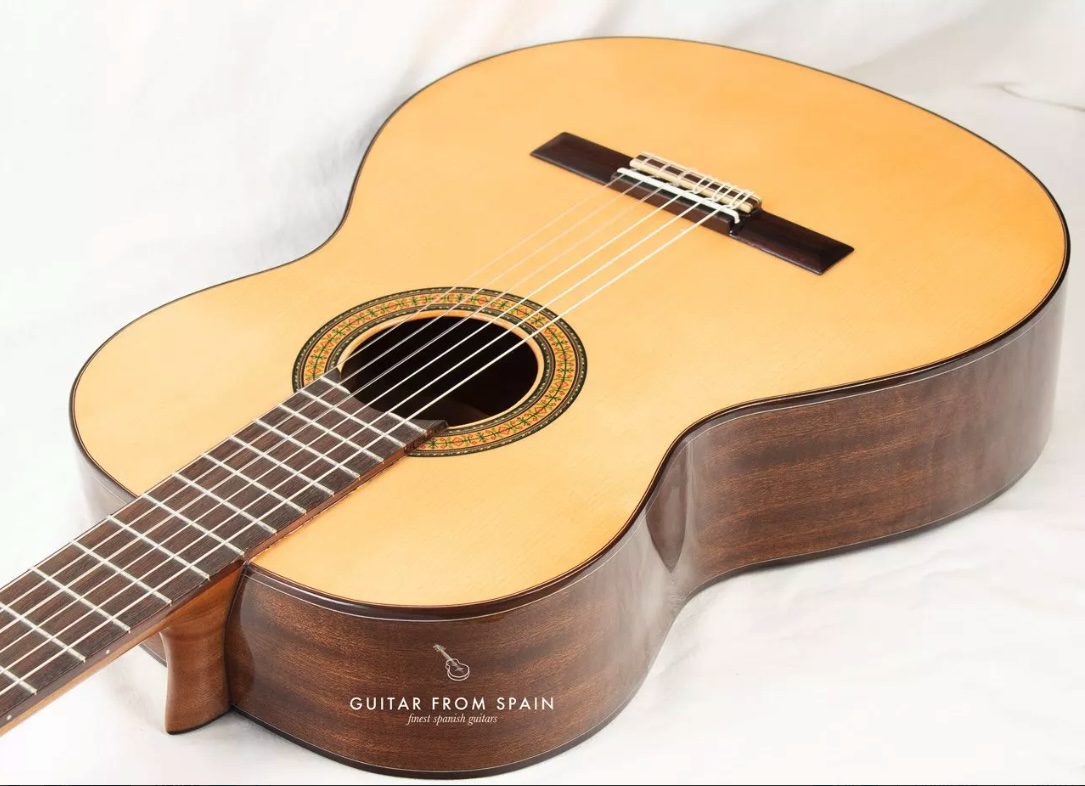
If neither crossover is quite right — perhaps she never did come from the acoustic world, and what she wants is a traditional classical with no cutaway, no electronics and no fuss — two siblings deserve a mention. The Camps M-1 with solid cedar top, mahogany binding and an adjustable truss rod; and the Alhambra 3CA with spruce top and sapele back. Both handmade in Spain, both priced far below what that quality usually costs elsewhere. We wrote briefly about both in Your first guitar from Spain.
The guitar that comes home
There is a small, quiet miracle in the giving of a guitar. It is one of the few presents that, if it works, comes back to you. The person who receives it plays it, perhaps slowly at first, perhaps in private, and one evening — on a holiday, at a birthday, on a summer night when the windows are open — you hear the first few bars of something half-remembered. And the house, which had been waiting a long time, sounds right again.
Happy Mother’s Day — whenever it falls where you are.

