
The crossover takes everything the traditional Spanish classical got right — and removes the one thing that was keeping players away.
What is a crossover guitar?
A crossover guitar is a nylon-string instrument — built in the tradition of the Spanish classical guitar — but designed to be more accessible and comfortable for a wider range of players. The name says it well: it crosses over the boundary between the classical guitar and the acoustic or electric guitar, combining the warm, expressive tone of nylon strings with a neck profile and feel that is closer to what most modern players already know.
The standard classical guitar has a nut width of around 52 millimetres, a flat fingerboard, no truss rod in the neck, and — in most cases — no cutaway and no electronics. It is a magnificent instrument, shaped by centuries of tradition, and it asks something of the player in return: a willingness to adapt the hand to the guitar rather than the other way around. For many people — particularly those who have come from a steel-string acoustic or an electric guitar — that adaptation is a genuine obstacle. The neck feels too wide. The strings feel too far apart. The whole instrument seems built for a different pair of hands.
Spanish lutherie noticed, and over the last two decades responded with one of its most quietly brilliant inventions: the crossover.
Who is it for?
The short answer is: more people than you might think. The crossover is the obvious choice for acoustic or electric guitarists curious about the sound of nylon strings — it puts that voice within reach without demanding they relearn their technique from scratch. But it is equally suited to players who have smaller hands and have always found the classical neck just a little too wide to play comfortably. Or to guitarists who already love nylon strings but want the feel of a narrower, more manageable neck for everyday playing, recording, or performing. The crossover does not ask you to be a different kind of player. It simply makes the nylon-string world easier to live in.
What makes it different
The changes are modest on paper. A narrower nut — typically 48 to 50 millimetres, closer to an acoustic guitar than a classical. A radiused fingerboard, curved the way steel-string players expect rather than flat. A truss rod in the neck for seasonal adjustment. A cutaway, in most models, that opens up the upper frets. And electronics, almost always, because the player drawn to a crossover is often someone with places to play and music to share.
On the guitar, in the hands, the effect is considerable. A crossover is a nylon-string instrument you can pick up and play without relearning your left hand, without a six-month adjustment period, without the sense that the instrument is asking you to change rather than the other way around. It meets the player where they are.
The Admira Crossover
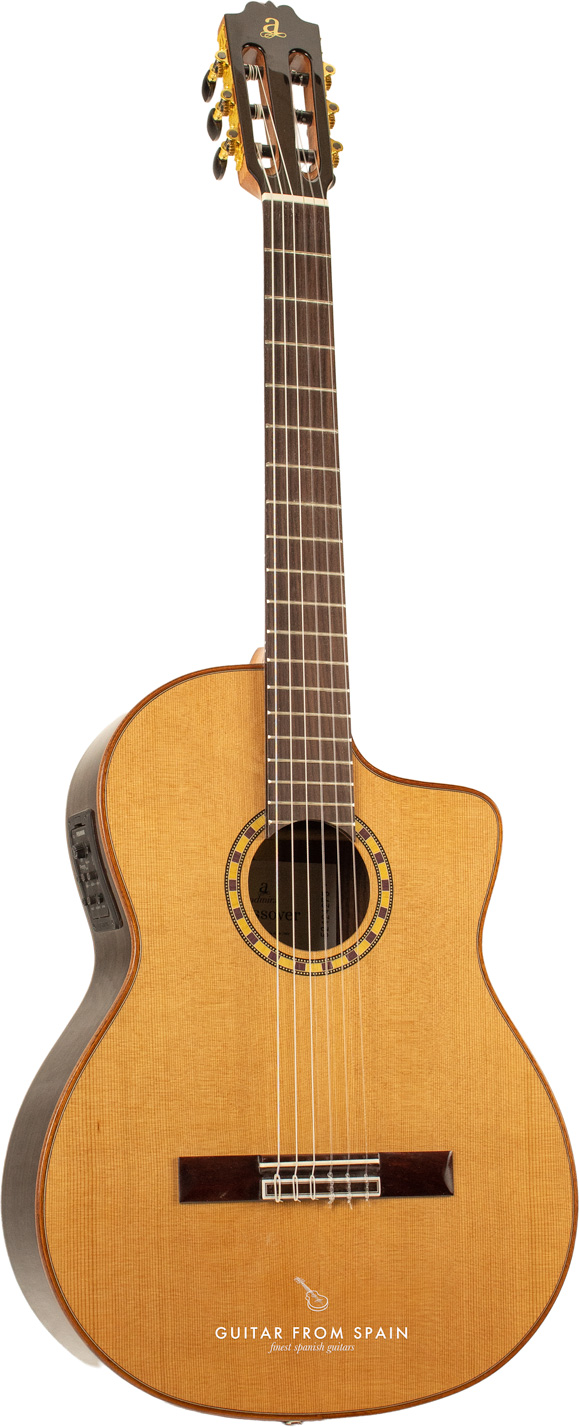
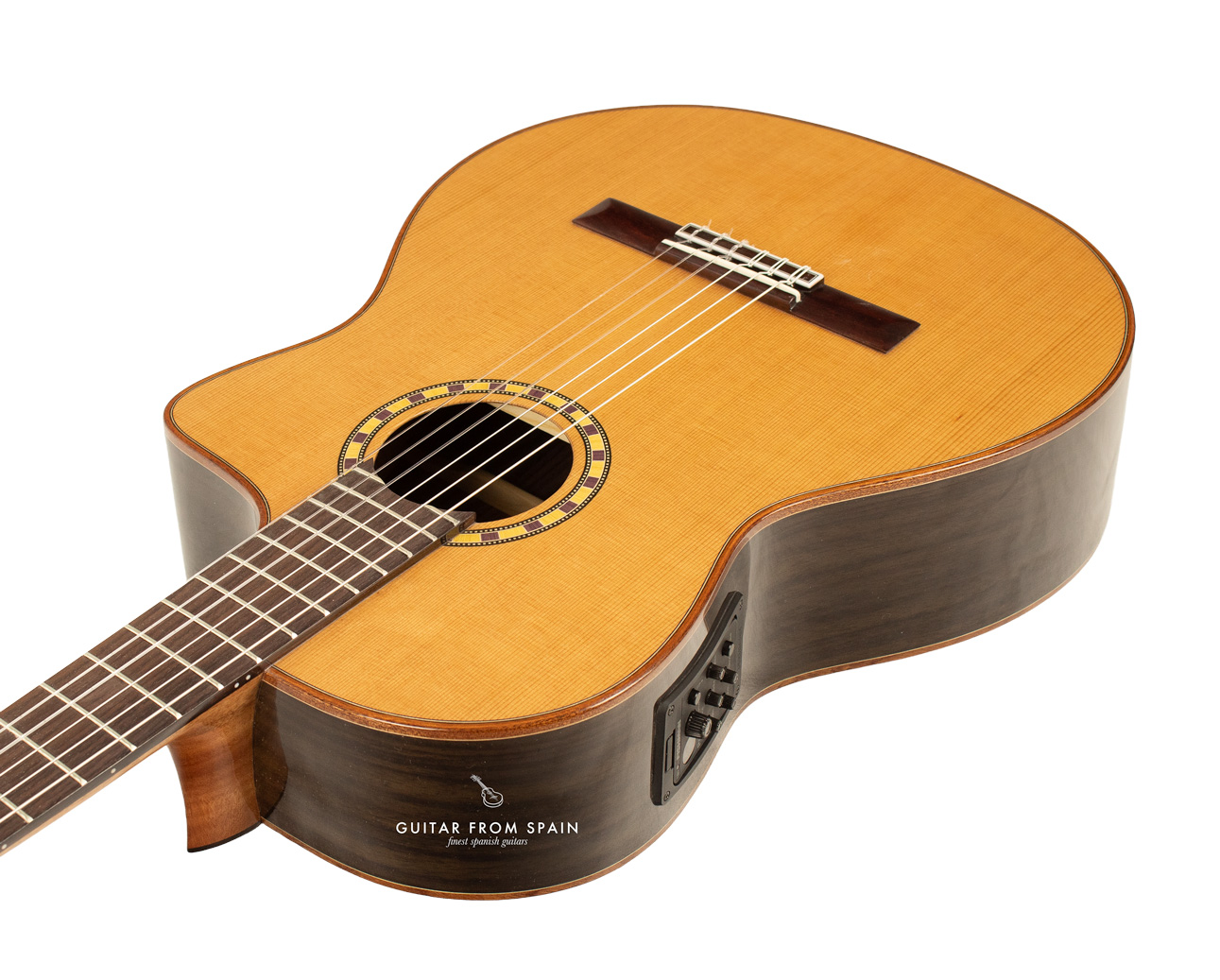
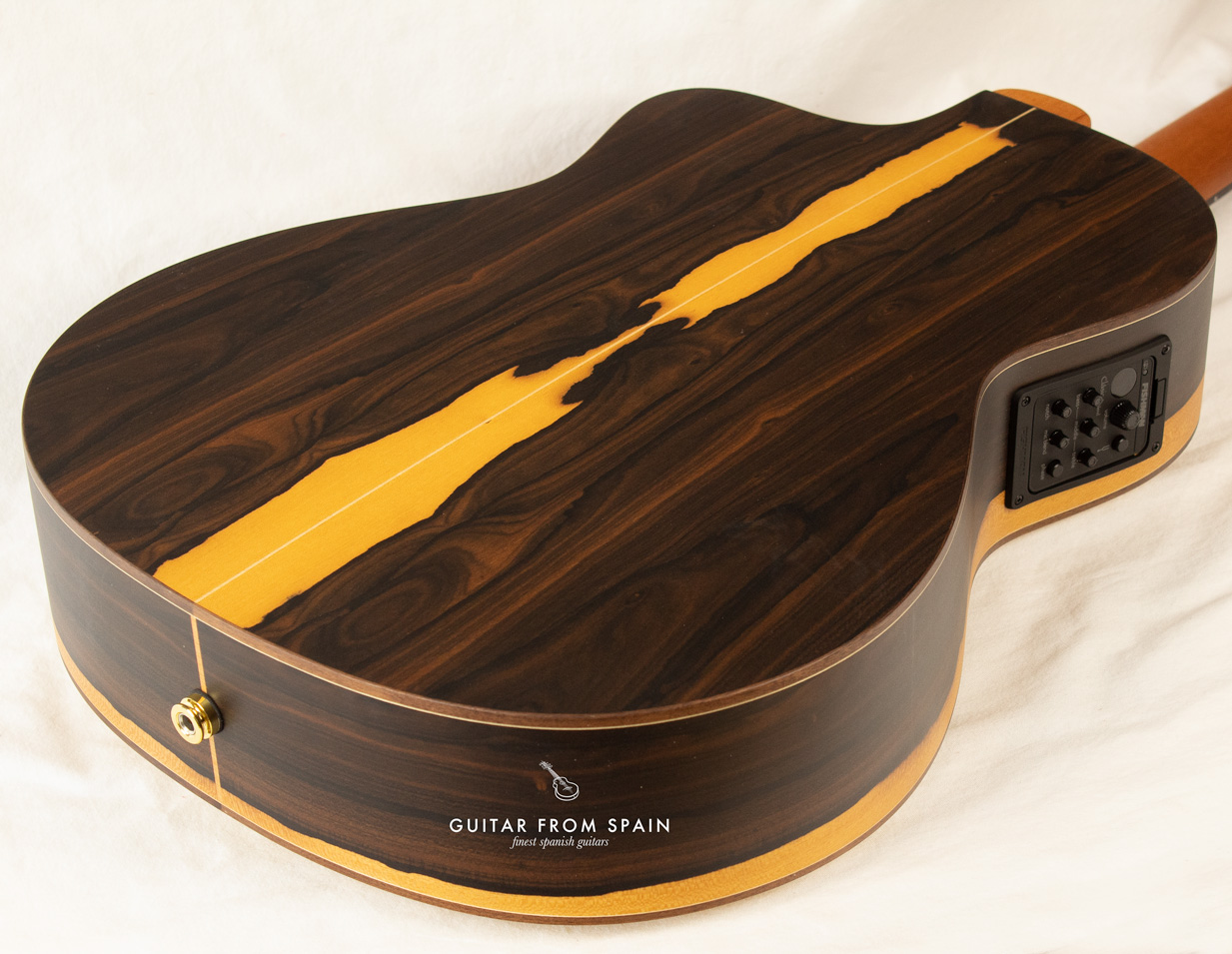
Admira make the entry into the nylon-string world very easy. The Admira Crossover — built with a solid cedar top and rosewood back and sides — carries the warm, rounded voice of a traditional classical while trimming the neck to 48 millimetres at the nut. That single change is, for many players, the whole conversation. Add a cutaway for upper-fret access and a Fishman Classica Blend preamp, and the guitar is ready from the moment it leaves the case: for the stage, the living room recording, or whatever comes next.
At its price point, the Admira Crossover is the most welcoming gateway into the crossover world. It sounds like a classical, plays like something friendlier, and costs less than many players expect.
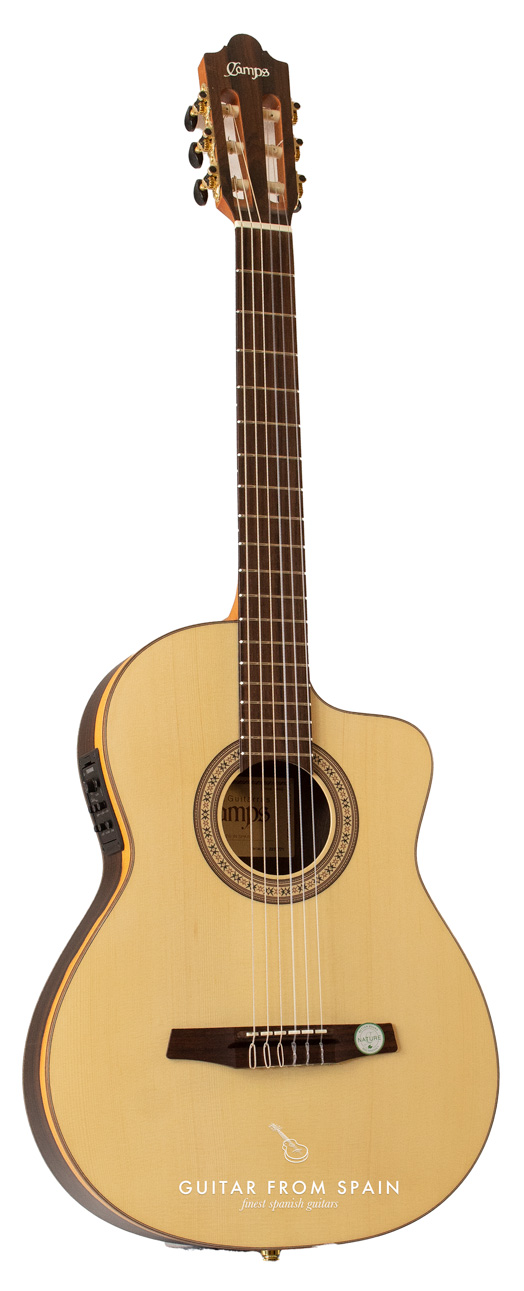
The Camps CW-1 Spruce
Where the Admira leans warm and round, the Camps CW-1 Spruce leans bright and immediate. The solid spruce top gives it a more open, responsive voice — quicker to answer a light touch, more articulate on single lines — and the body is slightly smaller than a full-size classical, making it lighter on the arm and easier to hold for long sessions. The neck is narrow, the scale slightly shorter, and the electronics come fitted as standard.
The CW-1 Spruce is the crossover for the player who wants a nylon-string guitar that moves at the speed of an acoustic. It is, in the best sense, a serious instrument that doesn’t make a fuss about being one.
The Alhambra trio
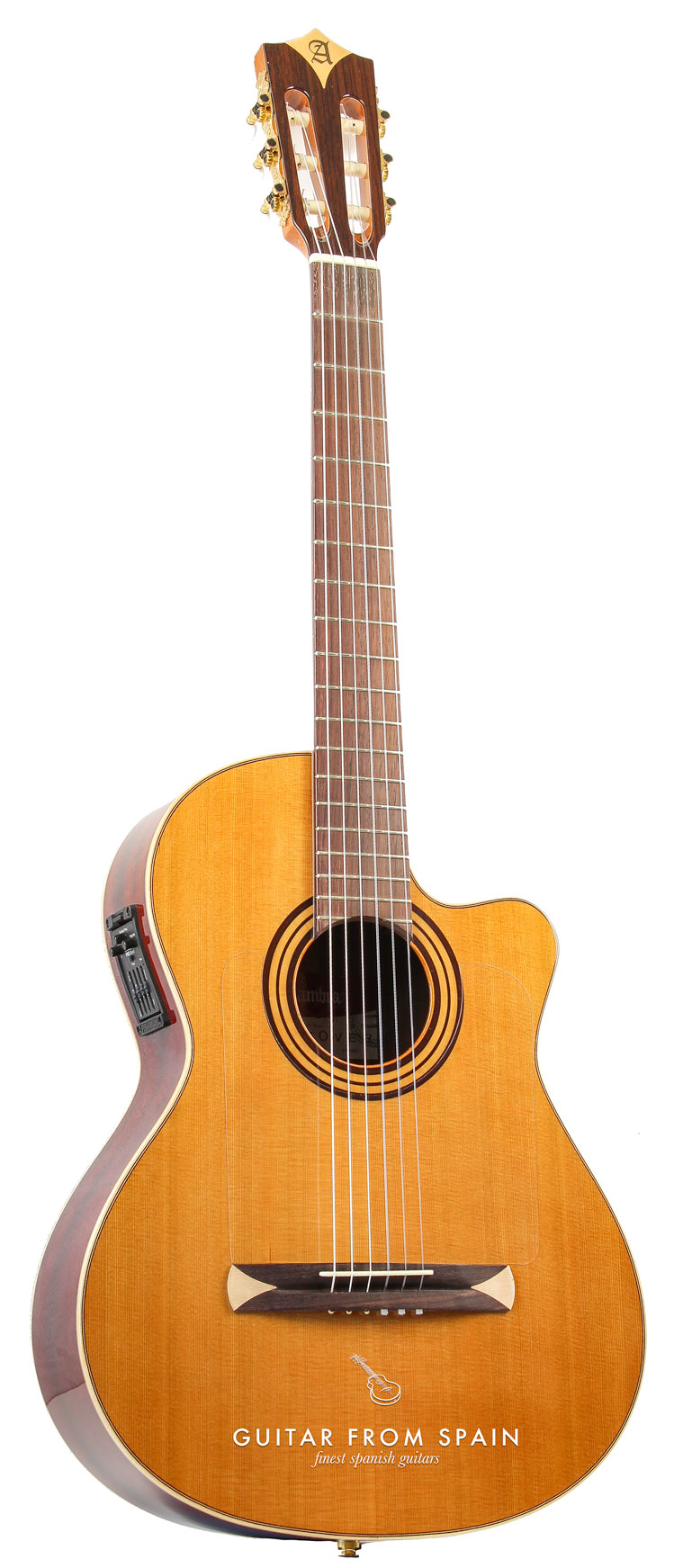
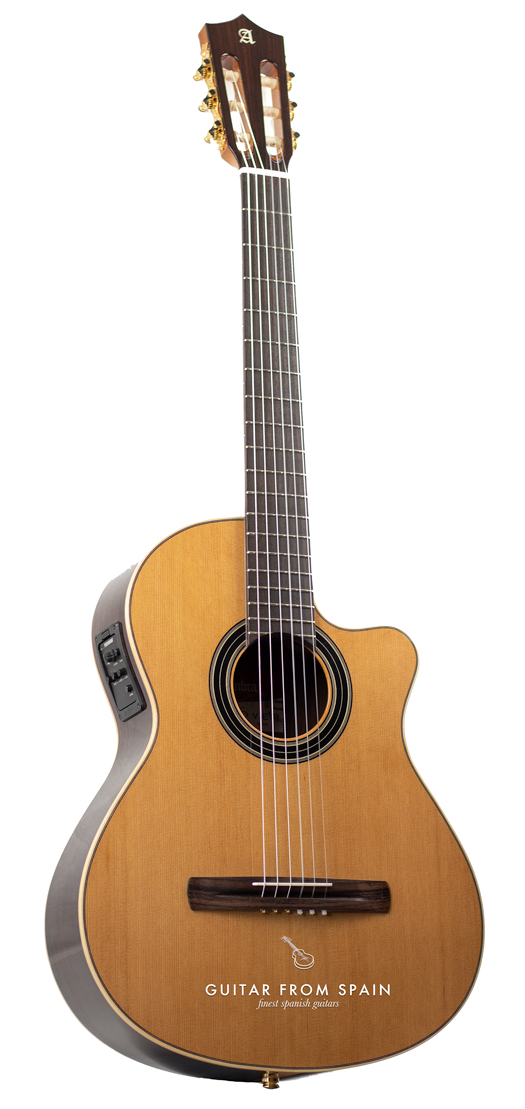
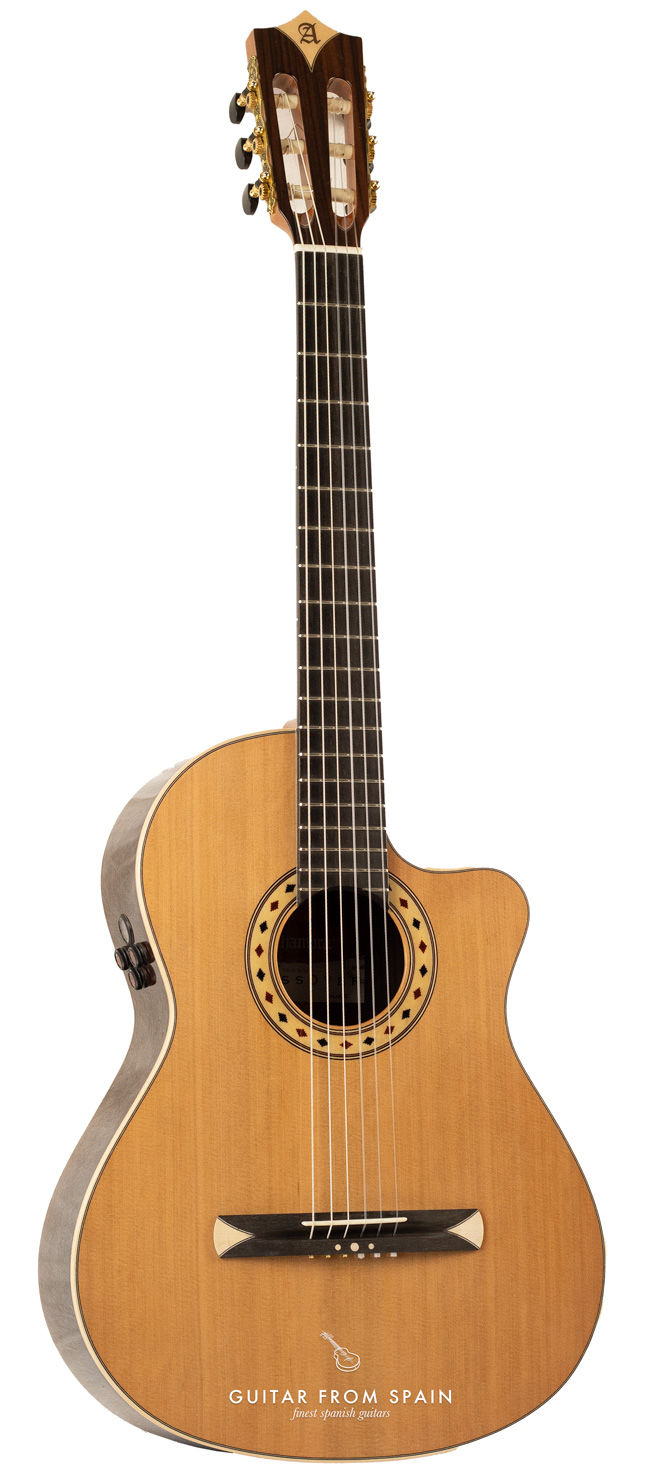
If Admira and Camps represent the gateway, Alhambra represents the full range. The Alcoy-based maker offers three nylon-string crossover models, each at a distinct level, and all three share the same DNA: solid cedar top, cutaway body, truss rod, and Alhambra’s characteristic precision in fit and finish.
The CS-1 CW E1 is the entry point — sapele back and sides, rosewood fingerboard, Fishman electronics — and it is a remarkable guitar for what it costs. The CS-LR CW E1 sits in the middle of the range: a thinner, slightly lighter body with a more focused voice, well suited to the player who wants something between the entry model and the full premium build. At the top, the CS-3 CW E8: solid Indian rosewood body, ebony fingerboard, Fishman Flex M Blend system. Across all three, the neck width and playability — the things that make a crossover a crossover — stay consistent. What changes is the depth and complexity of the voice.
All three are handmade in Spain, and all three carry the kind of build quality that Alhambra has been refining for over half a century.
The Paco Castillo 221CCE
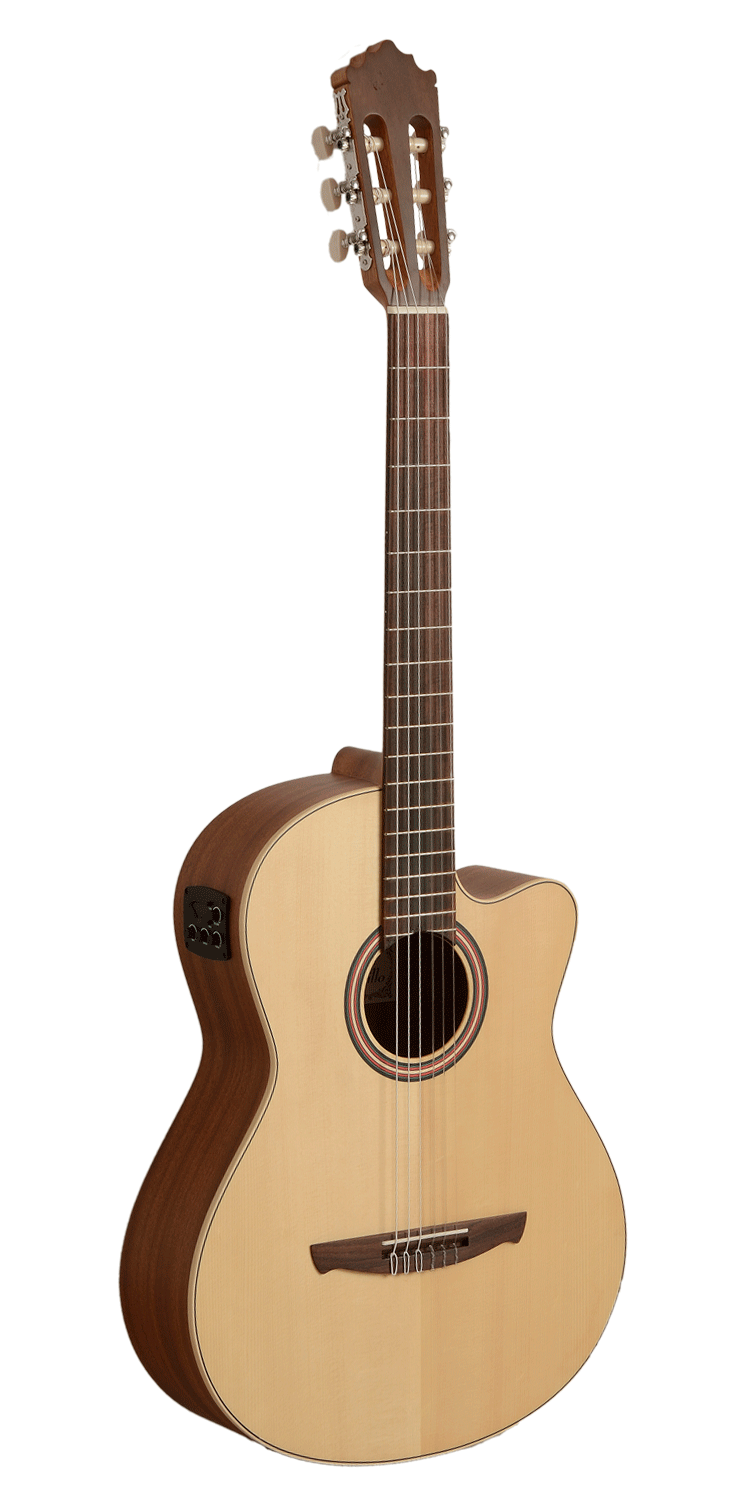
Paco Castillo is a newer name in the Spanish lutherie world, but the 221CCE has become a quiet favourite among players who want a serious crossover without the premium price tag. Solid spruce top, sapele back and sides, matte finish, 48-millimetre neck with radius, and a Mings MG30 preamp with built-in tuner. A gig bag comes included.
The 221CCE is particularly well suited to the player still finding their footing in the nylon-string world. It plays convincingly, sounds better than its price suggests, and leaves plenty of room to grow. If you end up staying — and most do — it will have served you well while you decided.
The Prudencio Saez Stage

The Stage is something else entirely. Prudencio Saez built it specifically for the performing musician — someone who needs a nylon-string guitar on stage without the feedback, the bulk, or the weight that a full-body classical brings. The body is thin. There is no soundhole on the top; instead, a side sound port projects the acoustic tone toward the player. The neck is narrower and thinner than a standard classical. The finish — spruce top, rosewood body, ebony fingerboard — is a thin matte lacquer that leaves the wood open and resonant.
The Stage is not a learning instrument. It is a working one. For the musician who already knows what they want and needs a nylon-string tool that can keep up under lights and in front of a crowd, it is one of the most interesting guitars in this price bracket — and one of the most distinctive-looking instruments Spain has produced.
Which one?
The crossover has become Spanish lutherie’s most democratic achievement — the instrument that says yes to the greatest number of players. Whether you are arriving from a steel-string acoustic, returning after years away, or simply tired of feeling like the classical guitar was built for someone else, there is a crossover on this list that was made for you.
If you want warmth and a gentle welcome at a fair price: the Admira Crossover. If you want brightness, speed and a smaller body: the Camps CW-1 Spruce. If you want the Alhambra build at your budget: the CS-1 CW, the CS-LR CW, or the CS-3 CW. If you want solid quality without the premium: the Paco Castillo 221CCE. And if you need a nylon-string guitar built for the stage: the Prudencio Saez Stage.

